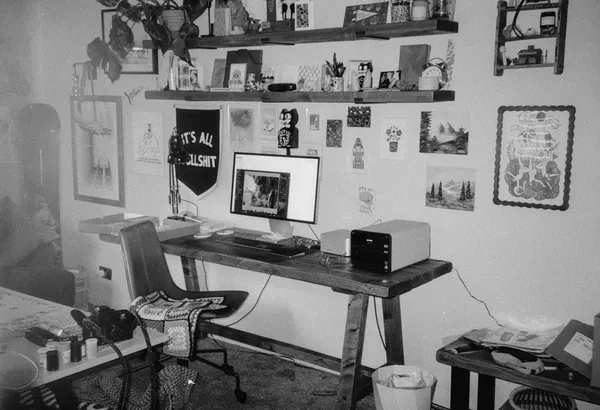
The shelf closest to my desk is a poor portrait of my reading life. A thin manual sits beside a book I’ve never finished, and a folded sheet of dimensions occupies the space where another volume might fit. I keep these things within reach because I use them in fragments. They help answer the sort of question that interrupts a piece of work.
A useful reference doesn’t have to be read from beginning to end. One diagram may explain a joint clearly enough to deserve a permanent place nearby. A page of terms may help me describe a part without waving my hands. I want to be able to find that page again, so I leave a small marker and a note about what I came for.
The note matters more than the marker. A row of slips sticking out of a book tells me that I once found several things interesting. A few words on each slip tell me why. The reference becomes easier to use when the reminder belongs to the question that brought me there, especially after the project has changed and my memory has moved on.
The note matters more than the marker. A row of slips sticking out of a book tells me that I once found several things interesting. A few words on each slip tell me why. The reference becomes easier to use when the reminder belongs to the question that brought me there, especially after the project has changed and my memory has moved on.
There’s room for objects on the shelf too. A spare fitting can sit near the drawing that names it. A material sample can wait beside a book of surface references. I try to keep those relationships clear. Once the reason for keeping something has disappeared, it can move elsewhere instead of remaining within arm’s reach as a small obligation to be understood later.
Every so often, I clear enough space to see what has gathered. Some references return to the larger bookcase. Others stay because they still answer a recurring question. The process is pleasantly unambitious. I’m arranging a working distance between my chair and a few useful things, with enough room left for the reference I’ll need on the next project.
A shelf like this will never feel finished. Its order depends on the work beside it, and the work changes. For now, the manual opens where I expect, the folded drawing has a place to lean, and the pencil I put down while checking a measurement is still there when I turn back to the desk.