The awkward model needs a place to go when lunch arrives. So do the marked page, the cut piece of card, and the arrangement that looked promising until you tried it from another side. If every working surface has to be cleared completely, putting things away becomes a second task. Some work will survive in a drawer. Other work is difficult to understand once its pieces have been separated.
A room for making things benefits from a little space that can hold an unresolved arrangement. It does not need to be large. A shelf can keep two pieces beside each other. A board can preserve the position of several drawings. The aim is to return and see enough of yesterday’s question to continue it, without first reconstructing all the decisions that led there.
Allow an untidy interval
Rough work can be visually inconvenient. It is likely to have extra tape, a crooked edge, or several versions whose differences are obvious only to the person who made them. A space that always needs to look ready for a photograph puts pressure on those things to disappear. Giving them a particular place removes the daily negotiation over whether they are allowed to remain in view.
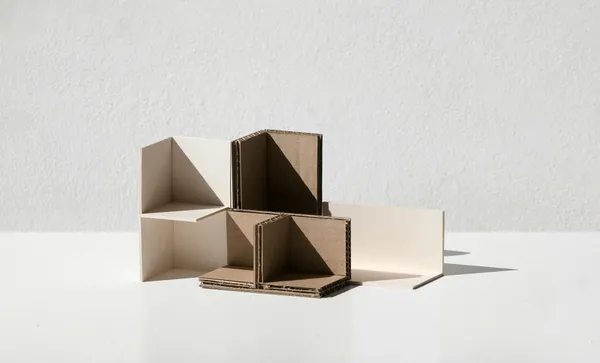
I like a shelf that can take something too ungainly for a folder. It leaves an idea visible at the scale at which it is being tested. A paper construction can stand up. Two bits of material can stay touching. When the arrangement is flattened into a photograph, some questions become harder to ask. Keeping the thing itself nearby preserves the option of turning it over once more.
A rough version needs enough room to remain legible overnight. The next person should be able to tell that its pieces belong together, and its maker should be able to return without rebuilding the whole arrangement. A spare shelf can do that job without turning the rest of the room into storage for unfinished ideas.
A rough version needs enough room to remain legible overnight. The next person should be able to tell that its pieces belong together, and its maker should be able to return without rebuilding the whole arrangement. A spare shelf can do that job without turning the rest of the room into storage for unfinished ideas.
This space needs a boundary. Otherwise, every object becomes a rough version with a claim on the room. A marked shelf or a defined section of the board makes the amount of available room visible. When it fills, something has to be reconsidered. That is a useful moment to decide which question is still active and which object is merely waiting for someone to admit they have finished with it.
Keep the question with it
A small note helps a rough version survive other people’s helpfulness. Say what is being tested and whether it can be moved. Someone clearing the table should not have to infer that two ordinary scraps are arranged at an important angle. The note also helps the maker. Returning after a few days, you can see the intended question before being distracted by every unfinished detail.
It can also help to separate the version from its comments. Keep the marked sheet nearby, but leave the object available for a fresh look. A rough thing covered in every reaction it has received can become difficult to see on its own terms. Someone returning to it should be able to notice a new question as well as recover the previous one.
It is worth distinguishing an active rough version from a reference. The first is waiting for another attempt. The second is being kept because it records something worth remembering. They can both stay, but they need different places. Keeping references in the active space makes it harder to see what still wants attention, and can give old decisions the appearance of unfinished work.
Eventually, the shelf should empty. Take a photograph if the arrangement is useful to remember, save the part that can be used again, and let the rest leave. A place for rough work earns its room by accepting new uncertainty. Its best days may look fairly untidy, with one awkward thing left standing where tomorrow’s hands can find it.