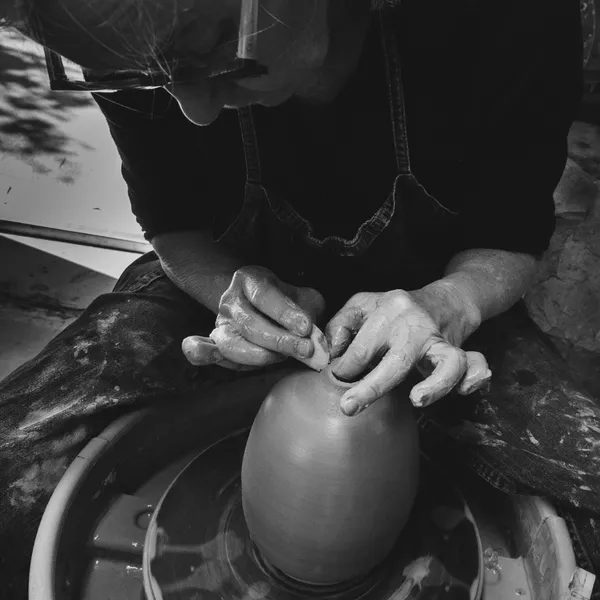
The clay gets on your hands before the vessel has much of a shape. It settles in the creases of the fingers and gathers around the nails, making a familiar hand look newly occupied. I enjoy the closeness of this kind of making: a soft surface, a little water, and an edge gradually becoming distinct enough to follow with a fingertip.
A small bowl is a particularly appealing shape to imagine. You know what a bowl does, so your attention can wander toward the details. The curve might be generous or quite shallow. The rim could feel broad beneath a thumb, or narrow enough to invite a lighter touch.
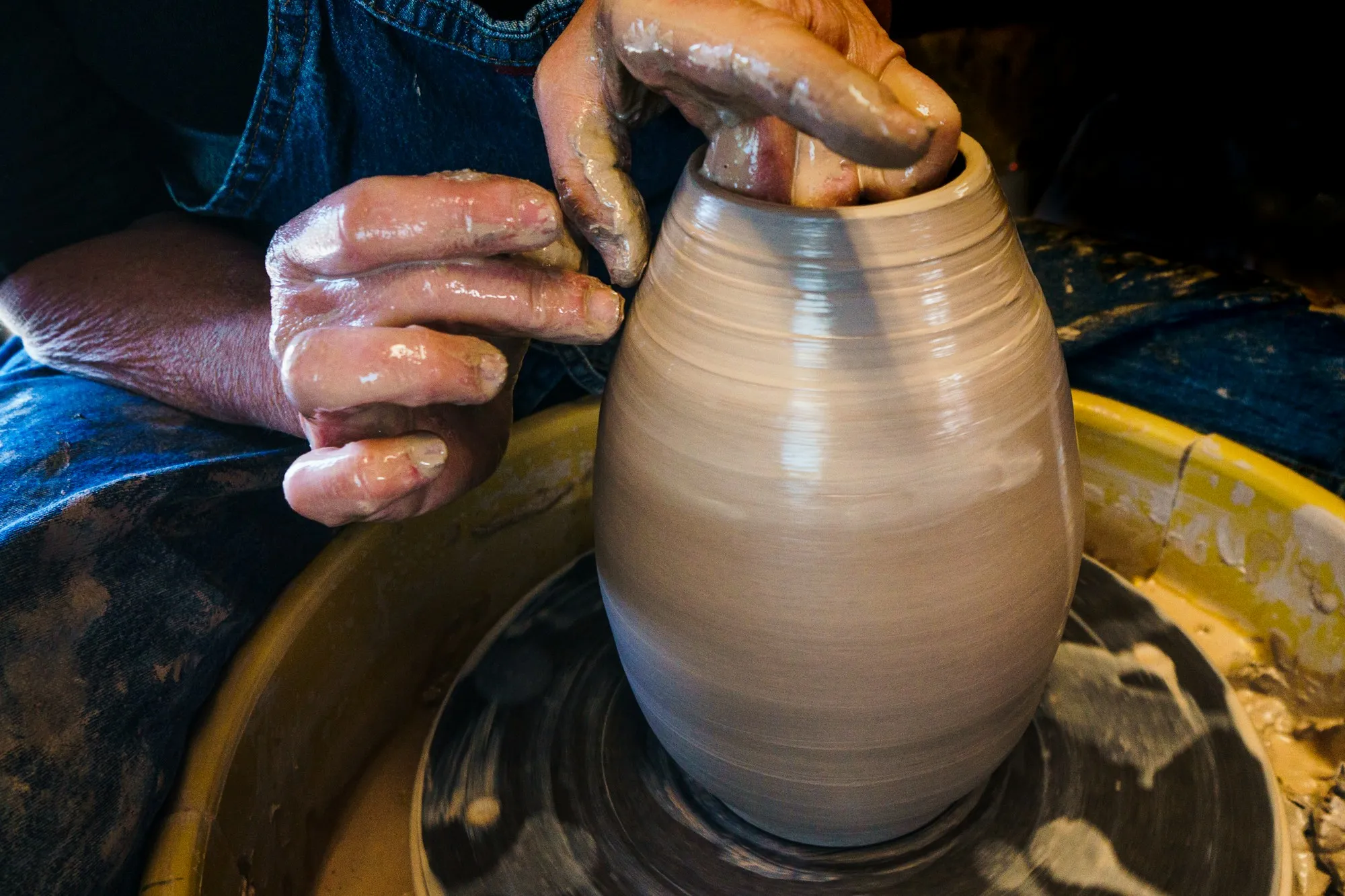
For a while, the material itself can hold the interest. Wet clay has a different presence from the finished ceramics you might keep on a shelf. There are traces of contact across its surface, and the form is still open to change. Watching the hands and the turning wheel gives you a way to follow the changing outline as well as the small points of contact.
A taller vessel gives the curve more room to travel. Its side can feel broad near the base, then draw inward toward the opening. Even a slight change in that outline gives you a different object to imagine holding, turning, or setting down.
Following the curve
A small vessel gives your hands a shape they can get to know. One side may feel fuller than the other. A slight dip can remain in the rim. Turning the form changes which of these details you notice first, and a modest object becomes interesting enough to keep looking at from several directions.
There’s a pleasing difference between looking at a curve and feeling it. From a distance, the outline can seem quite simple. Closer in, your attention follows the place where one surface meets another, or the point where the rim changes direction. I like the thought of an object being considered at this intimate scale, with the hands doing some of the noticing. A person can enjoy the appearance of ceramics for years and still find something newly absorbing in the way a piece of clay sits between someone’s fingers.
The wet surface brings another pleasure. A passing trace of water makes a small area catch the light. Beside it, a mark left by a finger remains visible. These differences give the eye something to follow while the broader form develops.
A shape of your own
Once you begin imagining a bowl of your own, proportions become pleasantly personal. You may like a deep hollow that gathers the shape inward, or a broad opening that lets the inside remain visible. A slight unevenness can give one side a character you prefer to the other. A preference can stay this specific. You can enjoy this curve, on this small piece, and find that another person is drawn to a different part of it.
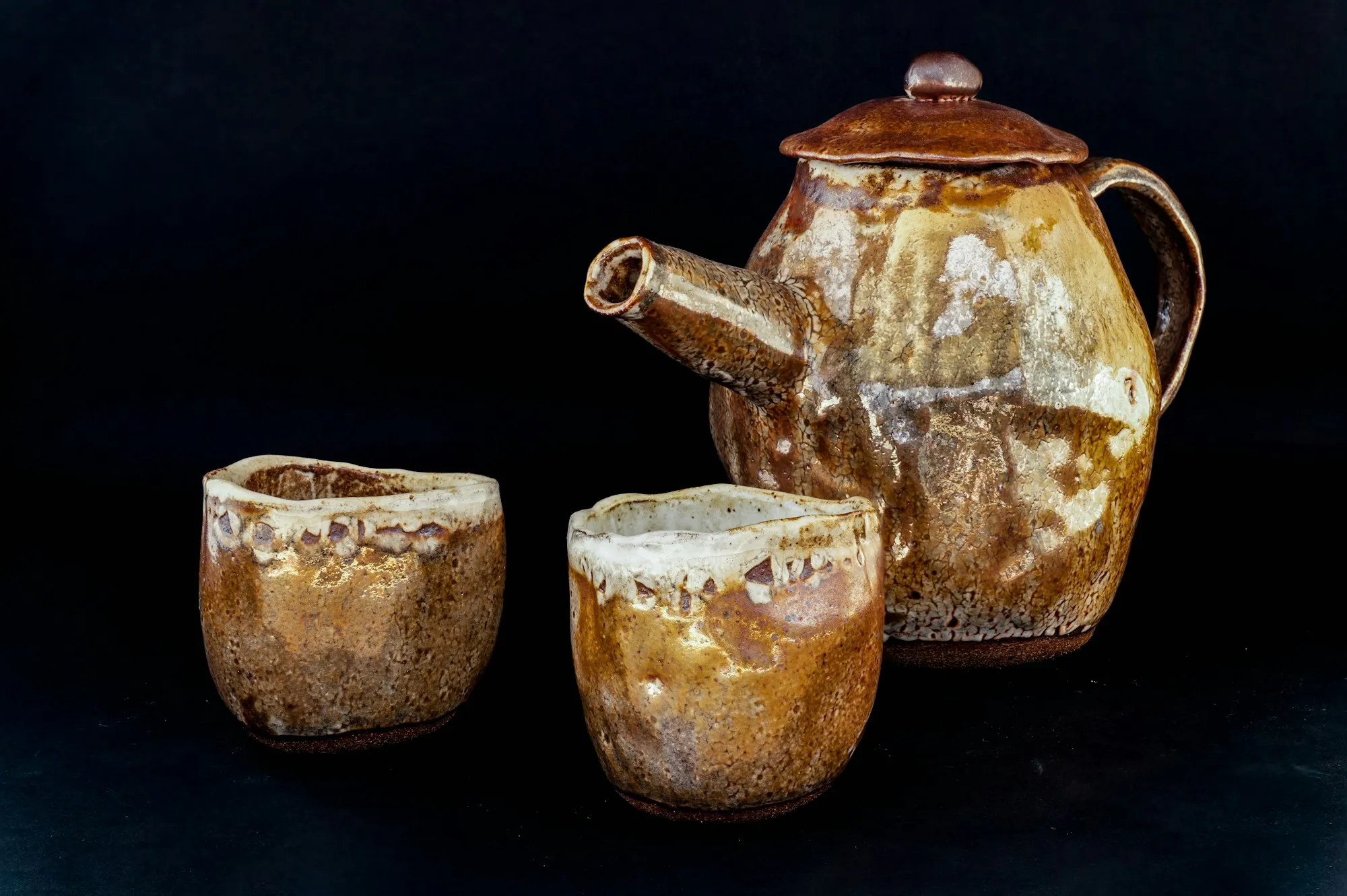
There’s room for a little amusement in that attention. A form may look very assured from one angle and unexpectedly cheerful from another. Set several pieces beside each other and their different proportions begin to feel like company. I’m fond of the one that invites a second look because its outline has an odd, agreeable turn that is difficult to describe.
Finished vessels offer another way to enjoy these choices. A handle interrupts an outline. An opening gives the eye somewhere to pause. Color draws attention toward a surface you might otherwise have passed over. Each piece offers its own small arrangement of things to notice.
A small vessel gives your hands a shape they can get to know. One side may feel fuller than the other. A slight dip can remain in the rim. Turning the form changes which of these details you notice first, and a modest object becomes interesting enough to keep looking at from several directions.
The pleasure I’m interested in begins earlier, while the clay is still wet and the form is being felt into place. There’s time to attend to the material simply because the contact is enjoyable. The vessel might eventually find a use on a table or a shelf. The making offers its own reasons to stay interested, right down to a slight irregularity in the rim that a fingertip can find before the eye settles on it.